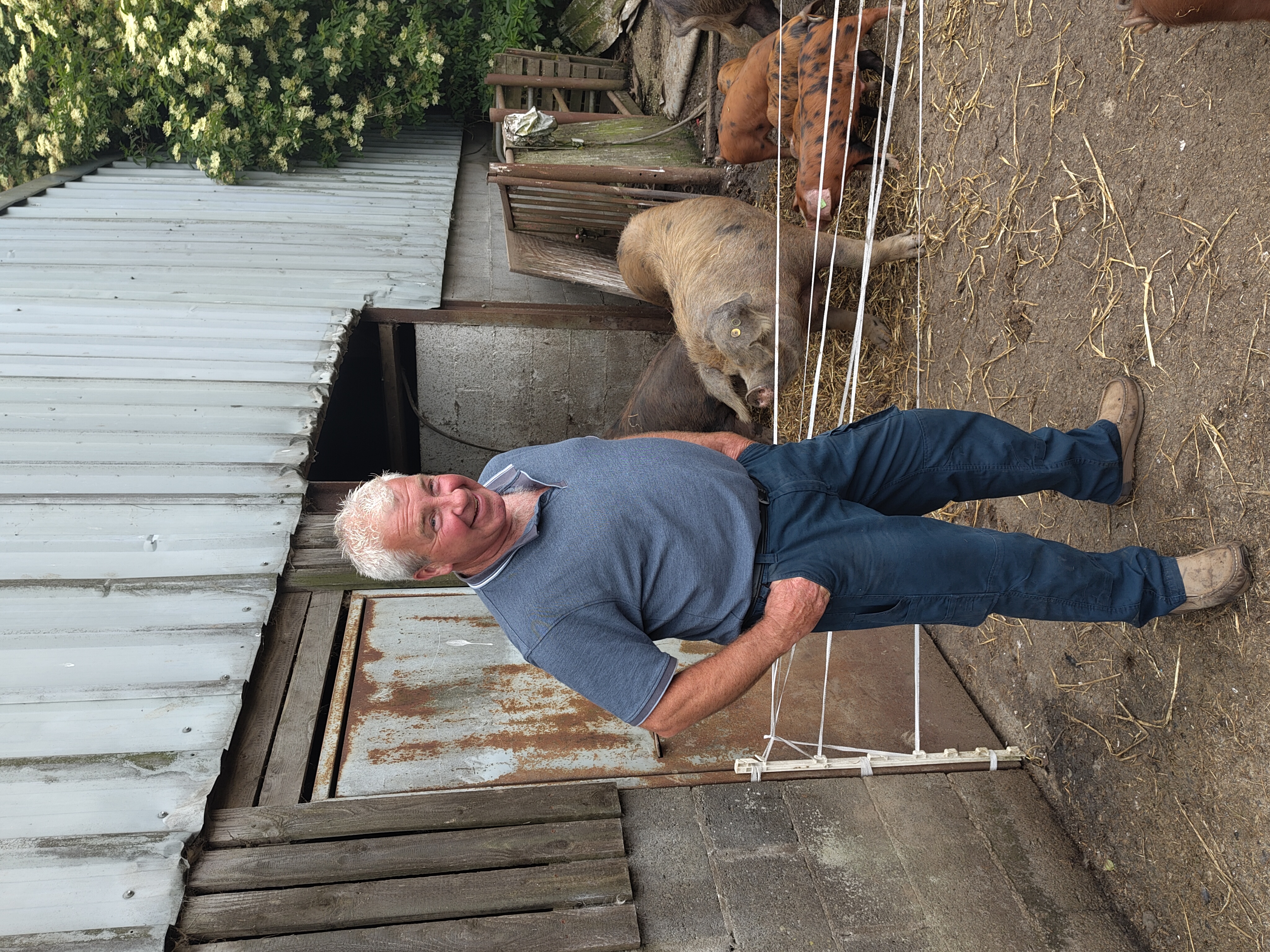
Dermot Allen
Location: Winetavern, Co. Wicklow
Farm Size: 1.5 ha (access to 607 ha of woodland)
Farm Enterprise: Rare breed pigs, free-range pork, hog roast catering
Woodland Pigs for a Healthier Forest and a Better Future
Can Pigs Help Protect Our Pollinators and Keep Our Water Free of Pesticides?
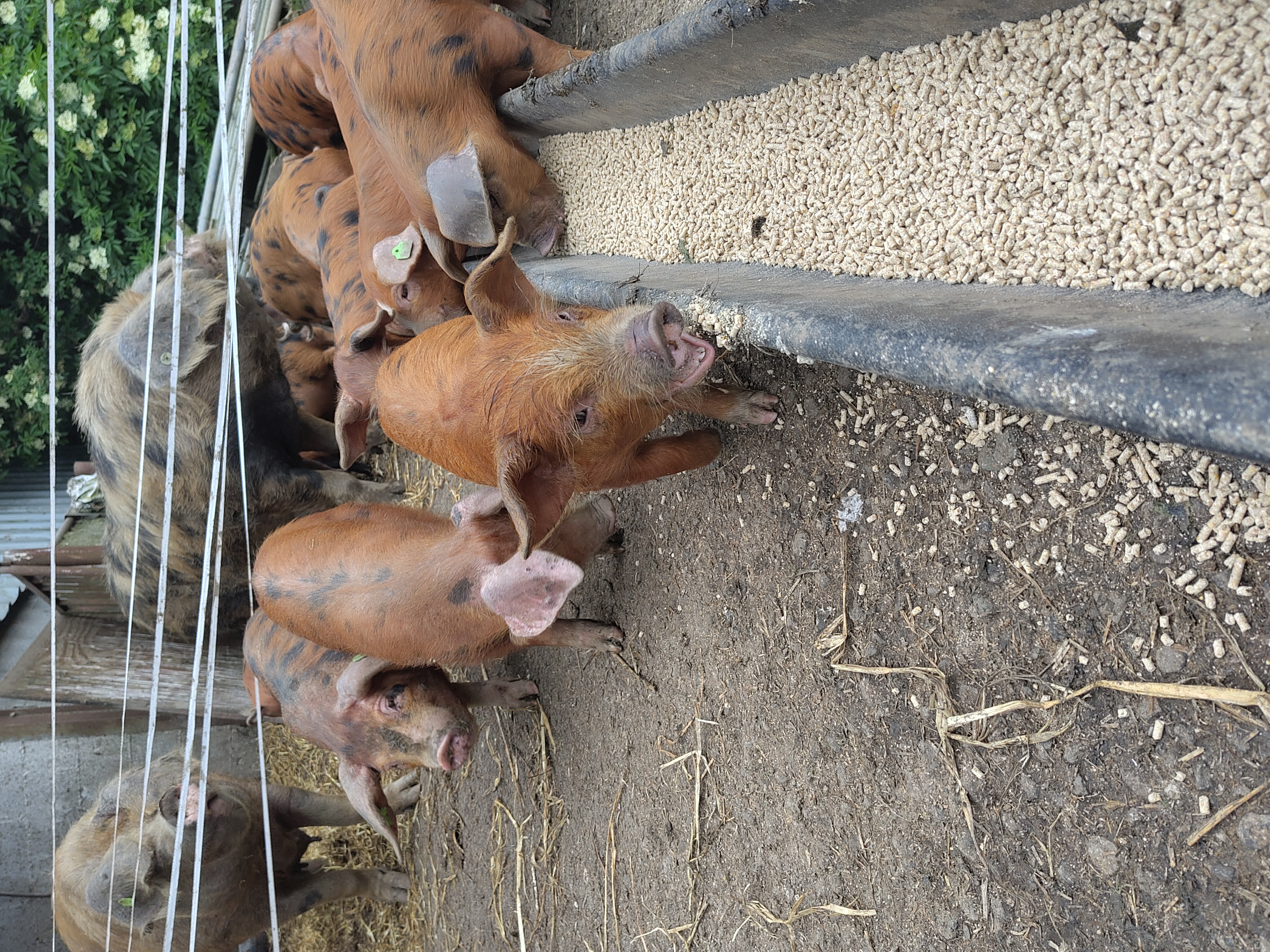
Dermot Allen believes they can and he’s proving it with his herd of rare breed pigs. Based in Co. Wicklow, Dermot owns a small 4-acre farm, but through innovation and collaboration, he now has access to over 1,500 acres of woodland across nine different sites in Leinster, with potential access to ten more. His pigs are primarily Oxford Sandy and Blacks who aren’t just raised for meat; they are woodland managers too. Since 1997, Dermot has been farming with a vision; to preserve heritage pig breeds while maintaining the highest standards of pig welfare.
How Can Pigs Replace Pesticides in Woodland Ecosystems?
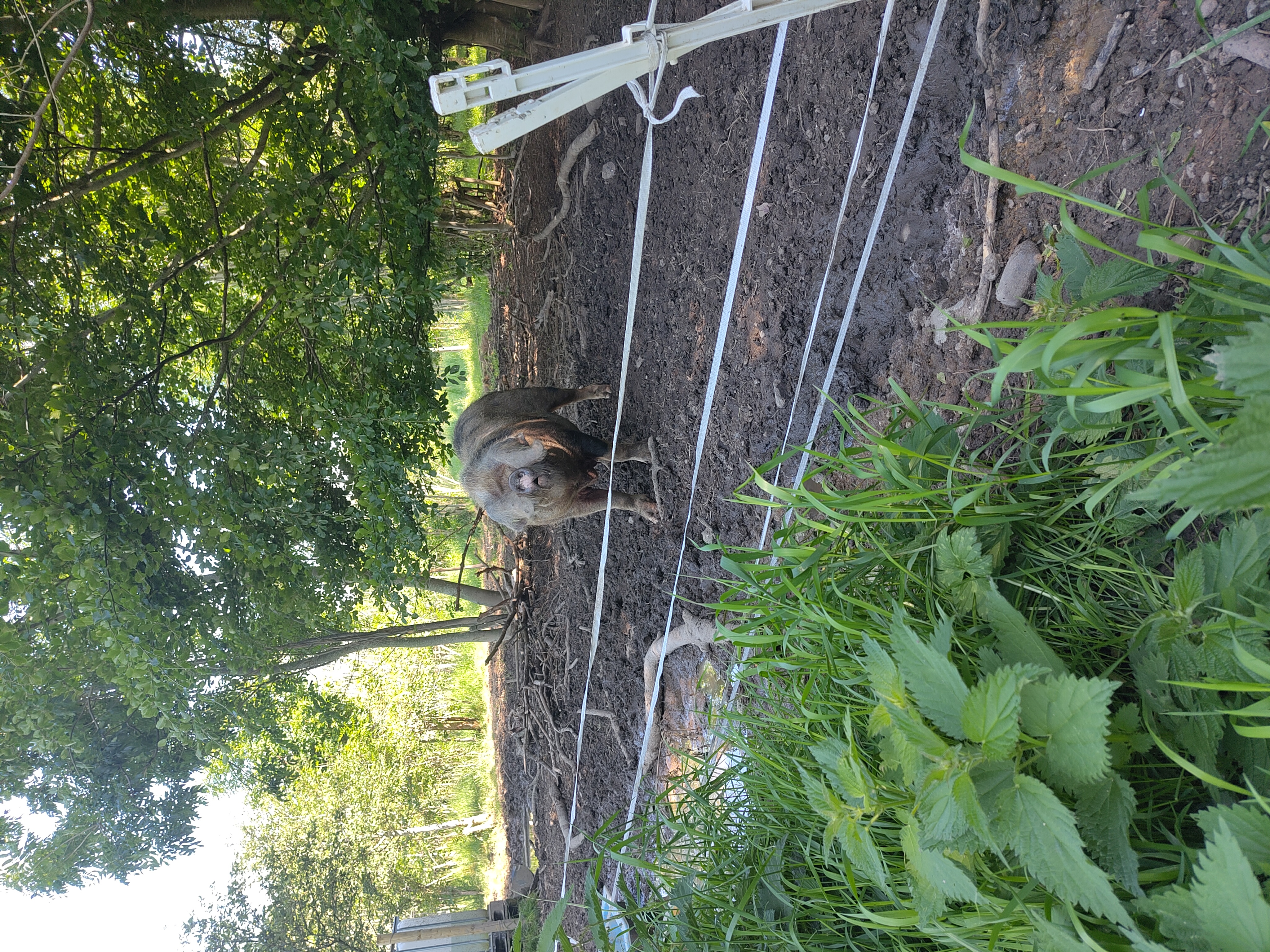
When Dermot first looked at a eucalyptus plantation with a landowner, they noticed lush grass thriving under the deer fencing. That sparked a revelation: pigs could graze here, safely and productively. Once introduced, the pigs began consuming beetle larvae, a pest that had been damaging the trees and costing landowners up to €5,000 annually in pesticide treatments. Thanks to Dermot's pigs, these woodlands are now pesticide-free, and the pigs enjoy a high-protein diet from the beetle larvae.
Why Do Rare Breeds Matter for Sustainable Farming?
Dermot raises about 300 pigs at a time, with 41 breeding sows. However only 10 out of 900 piglets meet his strict pedigree breeding standards. He focuses on old, unimproved breeds like Gloucestershire Old Spots and Oxford Sandy and Blacks, which are well-suited to outdoor, free-range conditions. By breeding pigs that thrive outdoors without needing routine antibiotics, Dermot’s approach reduces drug residues in the environment and supports healthier ecosystems. The result? Tastier, healthier pork that reflects the care and biodiversity of the woodlands they help restore.
Who is Educating the Public About Ethical Pig Farming?
Dermot isn’t just a farmer, he’s a teacher, speaker, and advocate. He founded the Irish Pig Society in 2013 to promote outdoor pig farming and preserve heritage breeds. As Chairman, he hosts annual farm walks, visits schools, and shares his passion for food education at every opportunity. He also serves on the Pig Health Council Ireland and the Irish Native Rare Society, working at the intersection of livestock, landscape, and public health.
Can Pigs Help Us Rethink Farming and Food Systems?
Dermot Allen’s work answers with a resounding yes. By blending animal welfare and robust local food systems, he shows that farming can protect water and pollinators, promote rare breeds, and produce exceptional food. His pork, sold to high-end Dublin restaurants and through his hog roast business, is not only more ethical, it’s richer in flavour and free from routine antibiotics and chemical residues.
Nominator: Tom Keane, Farming for Nature Ambasador
Nomination: As a board member of The Irish Native Rare Society I have come into contact with many livestock breeders from various organisations and I feel that Dermot Allen, utilising pigs to manage woodlands specifically, is at the forefront of matching species and breeds of livestock to specific habitats where the use of livestock may have beneficial results on the landscape. With the depressing reality of diseases and invasive species such as destructive beetle species coming into Ireland from outside any measures that can be employed to impede the spread of diseases are to be welcomed, preferably measures that do not involve reliance on chemical pesticides which will undoubtedly have adverse unintended consequences. Dermot's pigs have provided benefits for forestry owners to the extent that he now has access to almost 1,500 acres of woodland in 9 different sites. The benefits experienced by woodland owners include the pigs eating invasive beetle larvae at ground level and thus breaking the destructive cycle on eucalyptus plantations. Another benefit arises from the pigs digging up the ground, effectively acting as a living rotavator which causes optimal conditions for regrowth of native tree saplings and wildflowers. The pigs produced from this system of farming are much healthier and happier than their counterparts typically reared in battery units. The breeds farmed by Dermot such as Gloucestershire Old Spots and Oxford Sandy and Blacks are old breeds, "unimproved" and hence suited to the conditions experienced in free range agriculture in contrast to the modern breeds that have been developed for intensive battery farming methods. This in turn leads to the production of a higher quality product in the form of pork and bacon from pigs not dependent on the routine administration of medicines including antibiotics. The more that livestock keepers can develop breeds in conditions that do not require the routing administration of drugs the better for the population consuming food from such livestock with the added benefit of the manure from the livestock concerned not being contaminated with the residue of the medicines with the resultant impacts on the ecosystem. The taste and texture of the meat from free range meat is incomparable from that produced in battery units. As Chairman of The Irish Pig Society Dermot has a role in educating the public on the use of free range pigs from the older breeds in landscapes such as woodland and with the higher profile likely to come from a FFN Ambassador position he would be much aided in this endeavour.