Gareth Culligan
Location: Castlebellingham, Co. Louth
Farm Size: 242 ha (100 ha owned, 142 ha leased)
Farm Enterprise: Arable crops, conservation agriculture
Can Reduced Tillage and No-Till methods Deliver Profitable Yields and Protect the Environment?
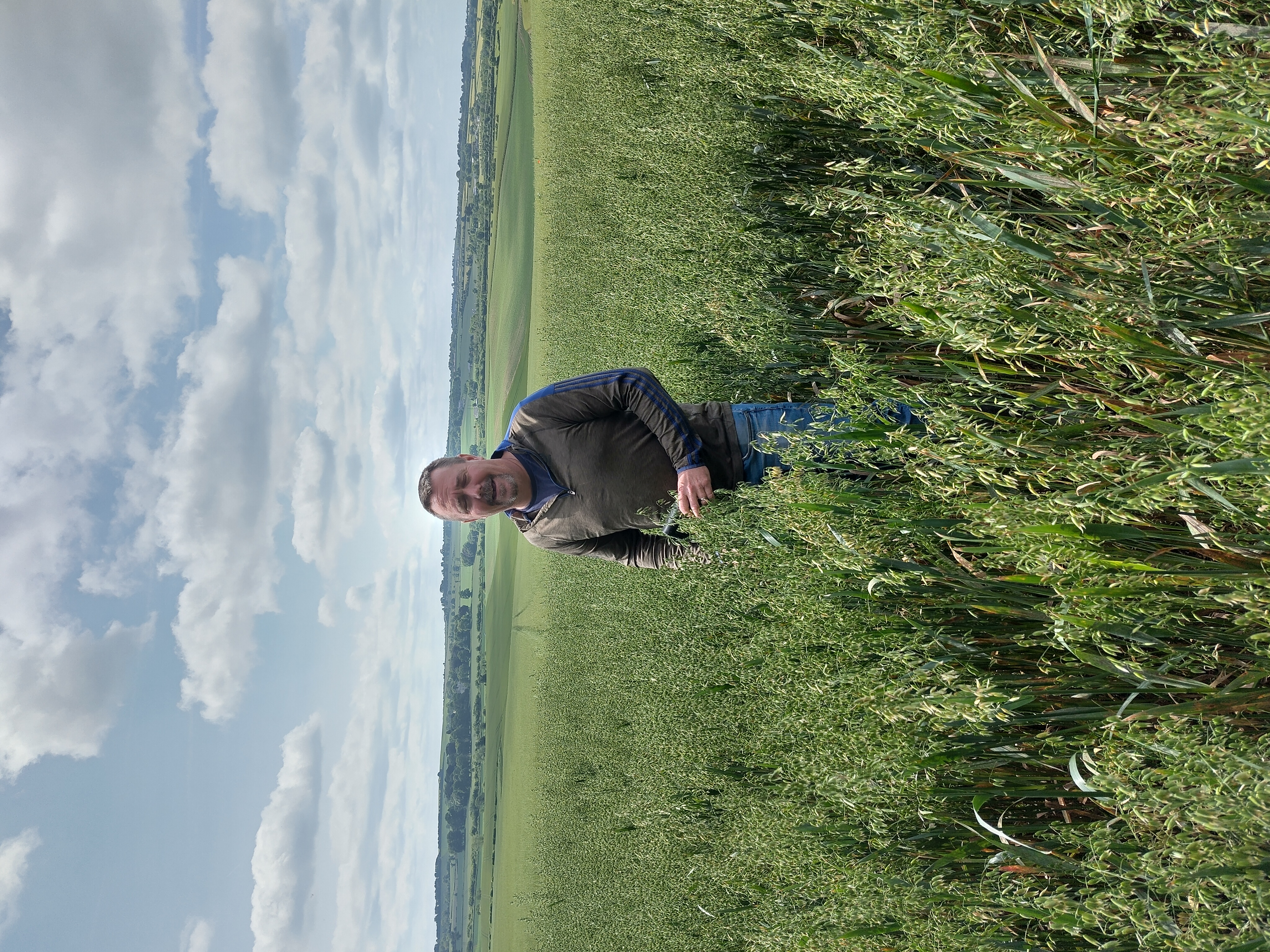
Gareth Culligan believes it can and he’s living proof. Farming in Castlebellingham, Co. Louth, Gareth manages 242 hectares of arable land with a bold commitment to soil health, biodiversity, and low-input farming. Starting out in 2001, after years of farming alongside his father and gaining experience abroad, Gareth has transformed his family’s third-generation tillage farm into a leading model of conservation agriculture. With a focus on reduced tillage, cover cropping, and diverse rotations, he’s producing high-protein, high-quality grains while protecting water and wildlife.
How Does No-Till Farming Improve Soil and Reduce Carbon Loss?
Since starting minimum tillage in 2001 and moving to no-till by 2015, Gareth has seen a dramatic shift in soil structure and fertility. By reducing tillage, he avoids releasing soil carbon and nutrients into the atmosphere, builds organic matter, and supports a thriving soil ecosystem. Gareth now runs the farm with just one medium-sized tractor, proof that sustainable farming requires less horsepower and less diesel. He uses no compound fertilisers, applies only one fungicide and one herbicide per crop, and has reduced chemical nitrogen use by 5% annually, tailoring inputs with precision and minimizing risk.
Can You Grow 35 Crops Without Compromising Yields?
Yes, and Gareth shows how. His rotation includes wheat, barley, oats, beans, rape, peas, sunflowers, and buckwheat, alongside 35 different cover and companion crops. This diversity reduces pests and weeds, builds fertility, and delivers yields just half a ton per acre below conventional systems, but with significantly fewer inputs. His system allows him to farm profitably and resiliently, even in unpredictable weather. “The rotation is key, without it, conservation farming wouldn’t work properly,” Gareth explains.
How Does Conservation Tillage Support Birds, Owls, and Otters?
Gareth didn’t set out with nature in mind, but conservation farming has brought nature back. With no bare soil, birds thrive year-round. His land hosts buzzards, owls, and even an otter spotted along the river at the farm’s edge, where Gareth is creating wildlife corridors by linking hedgerows and scrubland. He even planted sunflowers in riparian buffer zones to block nutrient runoff and provide cover for birds, entirely self-funded. Gareth’s farm is a living example of how soil health and wildlife go hand in hand.
Who is Leading the Way for Regenerative Tillage in Ireland?
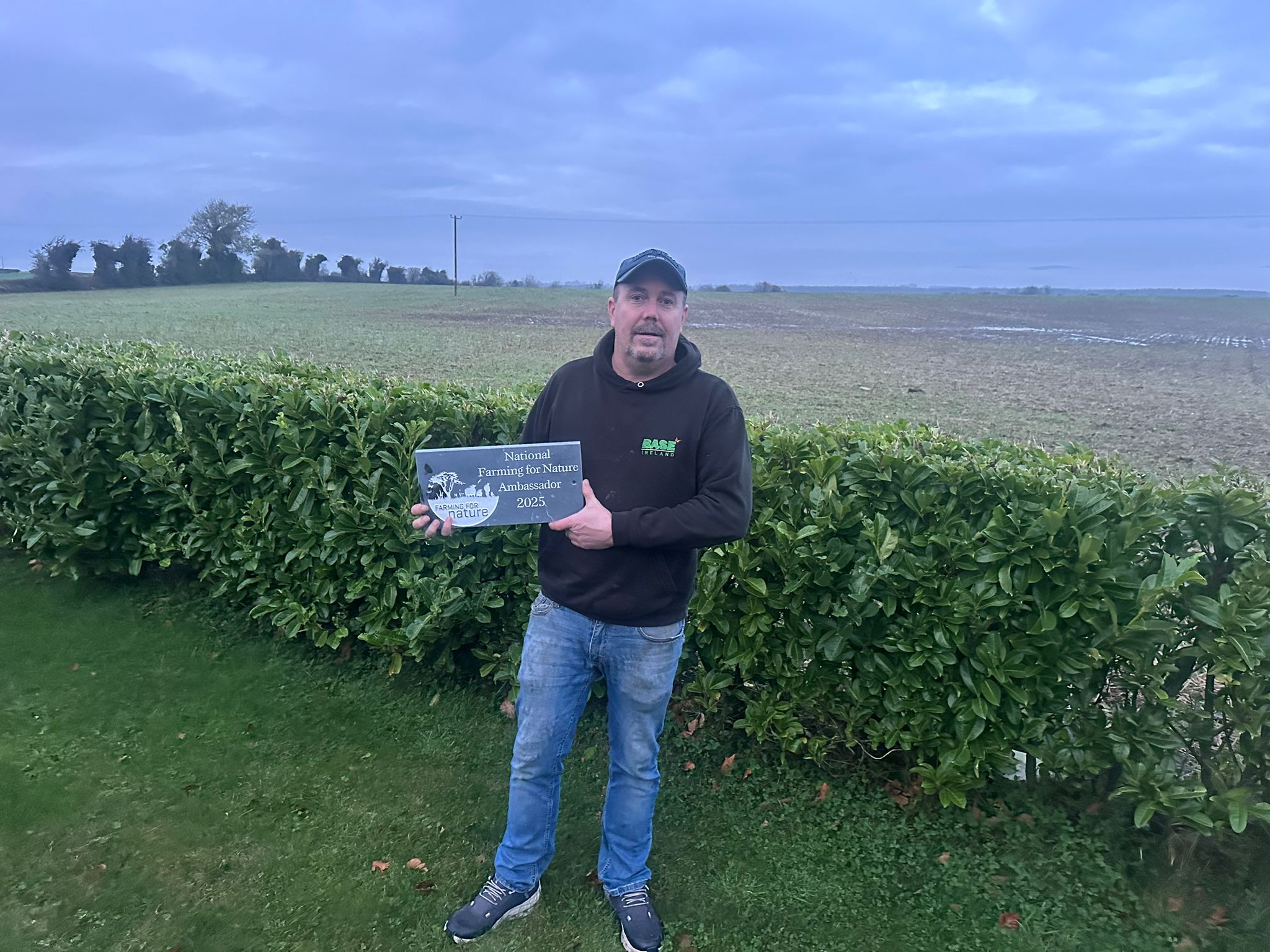
A founding member of BASE Ireland (2015), Gareth has helped build a community of conservation farmers. He’s a past Chair and Secretary of BASE, a member of Teagasc EIP, and part of ECAS, the EU’s conservation tillage network. Recognized as the Philip Reck Soil Farmer of the Year (2023), Gareth is not only an innovator but a mentor, eager to share what works and help other farmers transition to low-input, soil-first farming. His next goal scaling up his wildlife corridors, investigating carbon credit systems and improving water quality, securing a viable future for tillage farming.
Nominator: Emma Hart, Conservation Ecologist
Nomination: Gareth manages 600 acres of arable land in Co. Louth with a strong focus on reducing chemical inputs and on building soil health. He uses innovative practices like direct drilling, cover cropping, and companion cropping to farm profitably while prioritizing soil fertility - earning him the title ‘Phillip Reck Soil Farmer of the Year’ in 2023. Known for his bold and forward-thinking approach, Gareth is unafraid to take risks and experiment with new methods. When he discovers something that works, he is eager to share his insights with fellow farmers. His next goal is to enhance biodiversity on his farm, and he is working on creating a wildlife corridor to connect habitats on either side of his land. Gareth is always eager to learn more, to share his knowledge, and to build networks of like-minded farmers with enthusiasm and positivity.